● Serving Castle Rock, CO | Same-Day Appointments When Open

A hidden water leak usually shows up as a bill you can't explain, a meter that moves when nothing is running, or damage that appears with no visible source. Most of these signs have simple causes too, so the goal is to spot a pattern and then confirm it with a test.

EPA's WaterSense program says the average household's leaks can waste nearly 10,000 gallons of water every year, and that ten percent of homes have leaks wasting 90 gallons or more per day. Much of that water never reaches a visible puddle, which is why the signs below matter.
A bill that climbs while your habits stay the same is the most common first clue. Compare this month with the same month last year and with a month when the house was empty. Castle Rock Water notes that unaccounted spikes in water use are most likely a result of a leak.
Close every tap and appliance, then look at the meter. Castle Rock Water says that if it has a flow indicator that moves or a numeric display that increases, water is flowing through the meter. Castle Rock meters are typically inside the home, in the basement or crawl space.
A faint hiss or trickle at night, with no fixture in use, can mean water is escaping inside a wall, under a floor or in a supply line. Stand near the water heater, the meter and the main shut-off, since sound travels along pipe.
A damp or earthy smell in a closet, cabinet, basement or room corner can mean moisture is collecting behind a surface. A smell alone does not prove a leak, but one that returns after cleaning deserves a closer look.
Brown rings on a ceiling, paint that bubbles, wallpaper that peels or drywall that feels soft are signs that water is reaching a surface from somewhere. The stain often sits away from the actual leak, because water travels along framing and pipe before it shows.

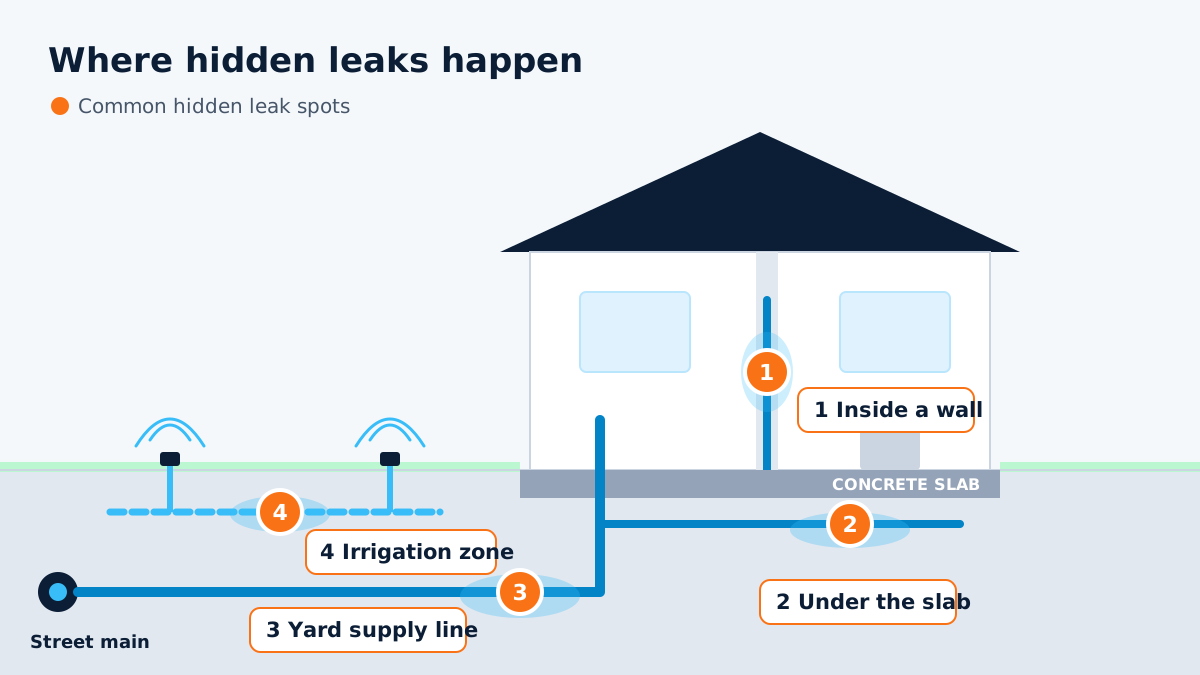
Floors that cup, lift at the seams or feel soft underfoot can point to moisture below. If the damage sits on a ground-level floor and your home is built on a concrete slab, water under the slab behaves differently from a leak in a wall, and slab leak detection is built for that case.
A patch of floor that feels warm, with no vent or sunny window nearby, can indicate a hot water line leaking under the slab. Treat it as a prompt to get an inspection, not to cut into the floor.
When pressure drops across the house rather than at one tap, a supply-line leak is one possible cause. A failing pressure regulator is another, so treat low pressure as a reason to run a meter test, not as proof.
Unusually green, soggy or sinking ground between the street and the house can point to a leak in the line that feeds your home. If the wet area sits near sprinkler heads, the irrigation system may be the source instead.
Leak detection uses non-invasive tools such as acoustic listening devices, moisture meters and thermal imaging to narrow down the location before any repair, with photo documentation of what is found.
Can a leak be hidden for months?
Yes. A small leak inside a wall, under a slab or underground may show no puddle, so the first sign is often the bill or the meter.
Does a high water bill always mean a leak?
No. Irrigation, guests, a filling pool or a running toilet can also raise usage, so confirm with a meter test.
Is a musty smell enough to call for leak detection?
It is a reason to inspect, especially with stains or a moving meter. Alone, it can also come from ventilation or humidity.
Who should I call if I can't find the leak?
A leak detection service can locate it with non-invasive tools.
Think you have a hidden leak?
Send a quick request. We reply fast and quote the price upfront.